Hawkmoths of Brazil by Alan Martin


1. Xylophanes with multiple forewing lines
1b. Xylophanes with multiple forewing lines but an undivided hindwing median band
2. Xylophanes with a medial forewing band
X. tyndarus tyndarus: bright green when fresh and with longer and narrower forewings than the similar X. marginalis and reussi. Note also the longer and straighter apical streak and the more distinct green hindwing postdiscal band.
Wing: 35-
X. marginalis: green when fresh but smaller than tyndarus with shorter and broader forewings, and a shorter and less distinct apical streak.
X. reussi: very similar to X. marginalis but note the grey submarginal area which is pale green in marginalis. Only found in the South and South-
Wing: 30-
X. pistacina: greenish-
Wing: 30-
X. anubus: can have a pale greenish tint when fresh. The largest of this group and with broad forewings. The key feature is the distinctive hindwing pattern with 3 black ‘thorns’ but note also the single black dot near the apex on the underwing.
Wing: 39-
X. indistincta: generally more olive or green (when fresh) than tersa and with a pale cream stripe down the centre of the thorax and abdomen. Note the two parallel dark lines along the forewing that both meet the inner margin. Only found in
the South and South-
Wing: 34-
X. tersa tersa: by far the commonest of this group and note that the lower of the two darker parallel forewing lines stops short of the inner margin. No stripes on the abdomen.
Wing: 27-
X. ferotinus: only one specimen exists in the Carnegie museum of a specimen collected in south-
X. titana: boldly striped olive green and cream species with a distinctive double stripe down the centre of the thorax and abdomen.
Wing: 31-
1a. Xylophanes with multiple forewing lines and a divided hindwing median band
IDENTIFICATION KEY: MACROGLOSSINI
See also the Photo Gallery or Pinned Specimens or General Information
X. aglaor: a falcated apex and a series of pale parallel lines above the one darker line along the forewing. Only found in South and South-
Wing: 32-
X. loelia: two parallel widely spaced dark lines on the forewing, both which almost meet the inner margin with a series of paler lines between.
Wing: 29-
X. pearsoni: very similar to X. libya which doesn’t occur in Brazil. Forewing dark central marking distinctive, and only found in North-
Wing: 35-
X. lolita: very rare and only known from Minas Gerais. Most similar to X. loelia.
X. fosteri: a distinctive broken darker main forewing line, and a notably pale apical area. Found in South and South-
Wing: 27-
X. isaon: dark and heavily striped forewings but the key distinguishing feature is the dark sides to the thorax (the tegula). Found in South and South-
Wing: 28-
X. neoptolemus: the sharply pointed apex and almost red median band on the hindwing are distinctive. Only known from Para state.
Wing: 31-
X. hydrata: olive-
Wing: 33-
X. elara: classic specimens have one dominant oblique forewing line which stops short of the apex, whereas hydrata has a number of lines of different width. However it is possible that elara is just a regional variation of hydrata and not a true species.
Wing: 27-
X. haxairei: appears long-
Wing: 35-
X. undata: the falcated apex and strong crenulations along the outer margin of the forewing are distinctive.
Wing: 33-
A strange Xylophanes specimen existed in the Rio Museum collection which has some similarities with X. isaon but with hindwing patterns more similar to X. tersa. The specimen was collected at Teresopolis in the Serra dos Orgaos and may be described and named in due course. This specimen had a forewing length of 33 mm.


3. Xylophanes with a broad oblique forewing band
X. crenulata: recently split from
X. ceratomioides, but it now appears that only crenulata occurs in Brazil.
Wing: 31-
X. guianensis: similar to crenulata above, but some differences in the size and shape of the subapical and apical spots, the largest of which is quadrate. Found in the North of Brazil whereas crenulata is found in the South and South-
Wing: 40-
X. xylobotes: separated from the above 2 species by the straight central forewing band and the cleaner less marked area above the band.
Wing: 37-
X. thyelia thyelia: much smaller than the other species in this group and lacking the post-
Wing: 23-
4. Xylophanes with a narrow oblique forewing band

X. epaphus: shorter and broader forewings than obscurus and a less well-
Wing: 29-
X. obscurus: most similar to cosmius but the forewings are darker and more uniform. The discal spot is also larger than cosmius. The postmedian line reaches the costa before the apex.
Wing: 36-
X. cosmius: see obscurus above. The apex is more acute than obscurus, the postmedian line reaches the apex and the forewing outer margin is slightly scalloped.
Wing: 34-
X. amadis: forewing deep green fading to brown with age, apex falcate. The postmedian line is sharply defined and with a pale border.
Wing: 38-
X. furtadoi: sharply falcate apex and scalloped outer margin of forewing. The postmedian line stops short of the costa. Only reported from Rondonia in northern Brazil.
X. lichyi: short broad wings with a postmedian line running to the apex. The forewing base colour is more greenish and it has only been recorded from the Northern states of Brazil.


5. Mostly brown Xylophanes species
X. depuiseti: olive-
Wing: 25-
X. ploetzi: distinctive upper forewing lines and white discal spot rather than black in depuiseti. Only reported from Amazonas.
X. porcus continentalis: until recently only X. porcus continentalis occurred in Brazil, but 3 new species have now been described. X. soaresi and X. alineae both occur in south and south-
X. alineae: smaller than soaresi and has less falcated wings. The outer forewing is paler and contrasts with the darker inner areas. Both alinea and soaresi have only been reported from South and South-
X. soaresi: see X. alineae above. It is more uniform brown and is thought that soaresi occurs at lower altitudes.
X. mielkei: found only in the dry cerrado of the North-
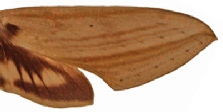
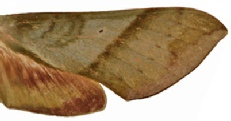
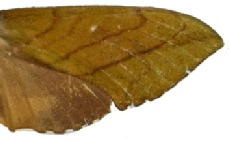
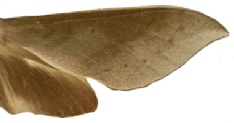
X. schausi: has greater variation in the colour of the forewings and is paler in the subapical area than X. p. continentalis and its recent splits, it has more rounded forewings and a dark apical streak. Note also the contrast between the darker thorax and the paler abdomen. X. schausi schausi is found in the South and South-
Wing: 31-
X. rufescens: rusty brown with scattered forewing markings.
Wing 34-
6. Other Xylophanes species
X. chiron nechus: a very common species and the only one which is bright green when fresh with a broad brown band on the forewing. Specimens with a brown ground colour instead of green do occur but are rarer.
Wing: 31-
X. fusimacula: when fresh the forewing has a green postmedian band and basal and discal patches. Only found in the North and North-
Wing: 36-
X. pluto: yellowish-
Wing: 29-
7. Phanoxyla
P. hystrix: unmistakable with its dark streaks and the yellowish postmedian stripe across the inner forewing. It has only been reported from Amazonas and Rondonia.
Wing: 39-
8. Hyles
H. euphorbiarum: very distinctive forewing and hindwing markings, but see Eumorpha fasciatus and vitis.
Wing: 27-
X.schausi schausi
X.schausi serenus




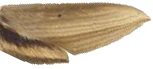
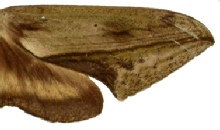
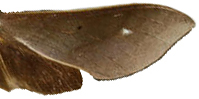
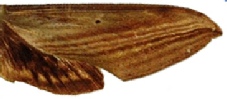
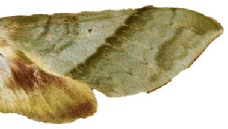
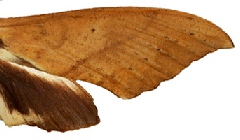
X. mossi: has only been reported from Guyana and North Brazil. There is some question as to whether it is a separate species or just small examples of
X. rufescens.